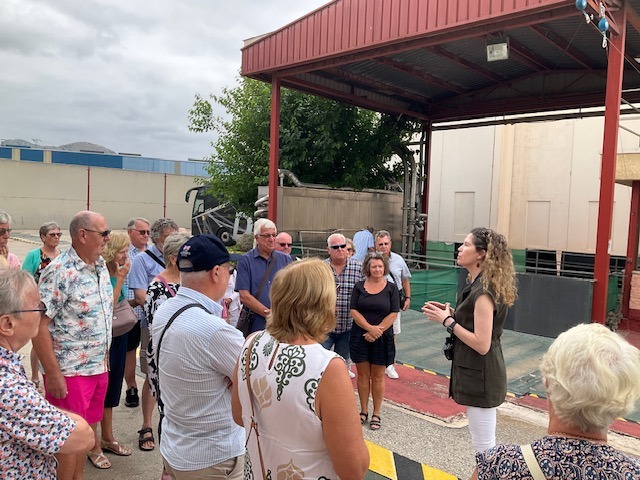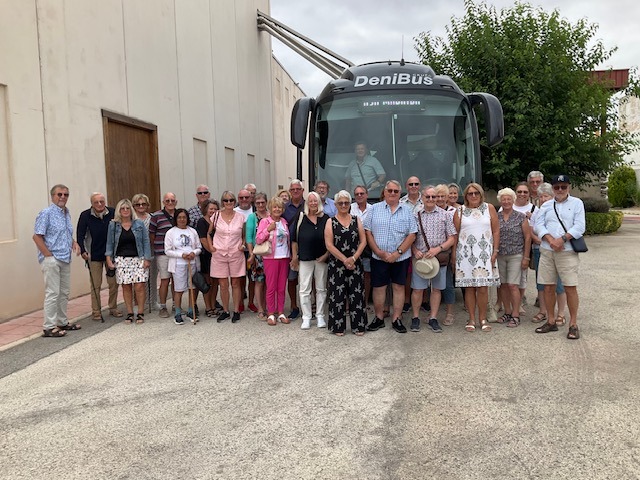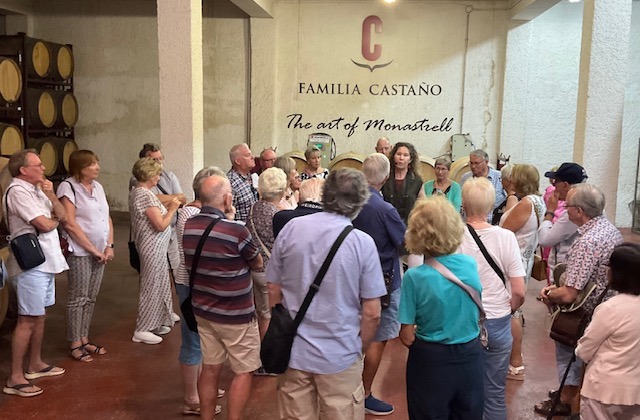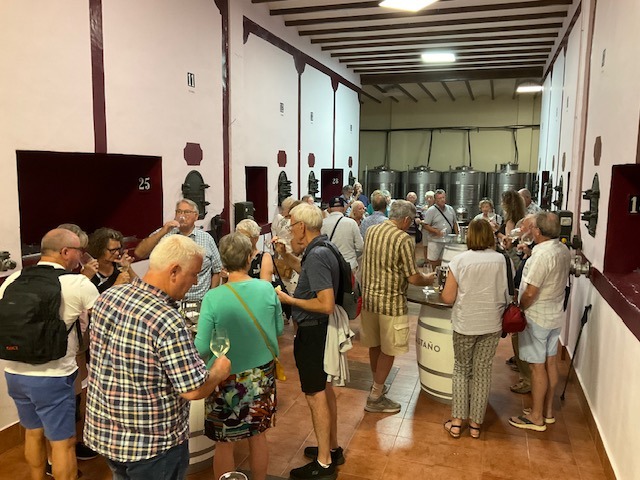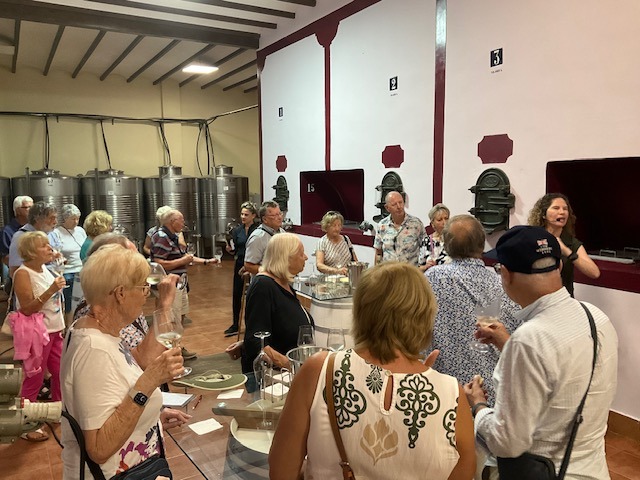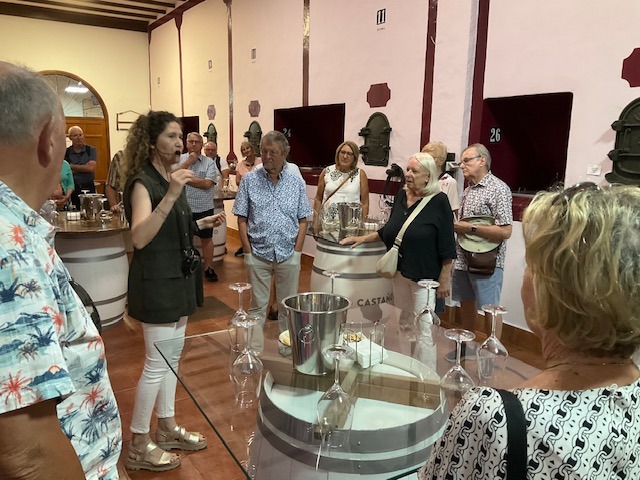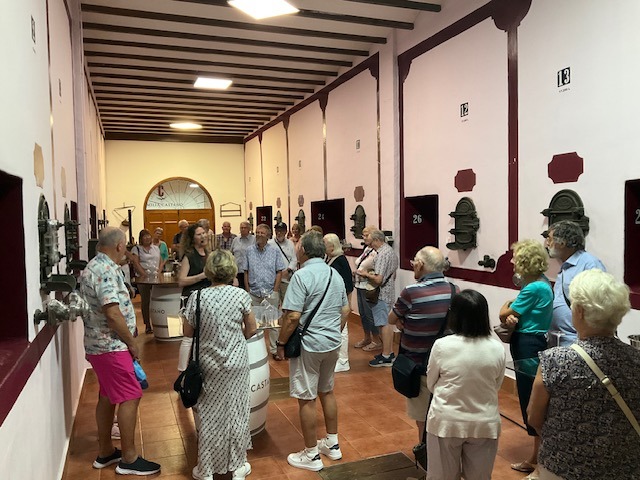
Early on Thursday morning 11th June, under low cloud and grey skies, 32 members of the Moraira-Teulada U3A Wine Tasting group departed by bus to the Castaño Bodega at Yecla in northern Murcia province.
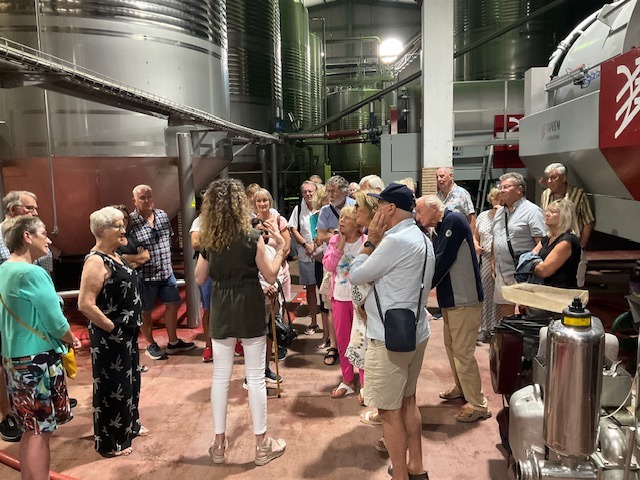
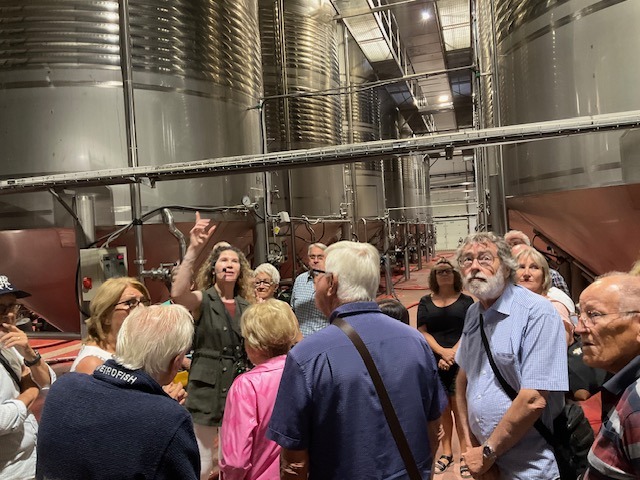
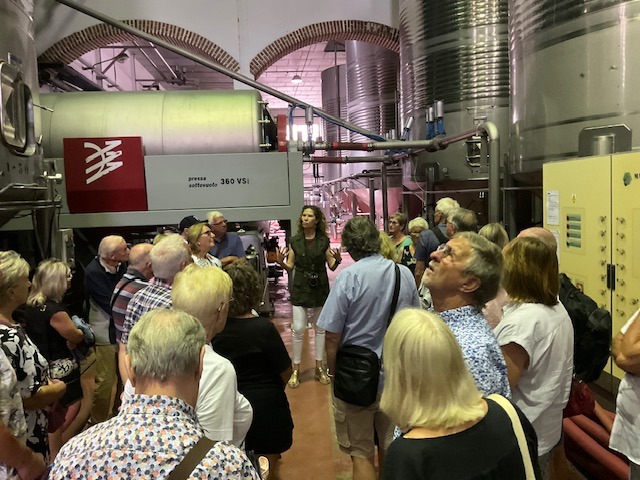
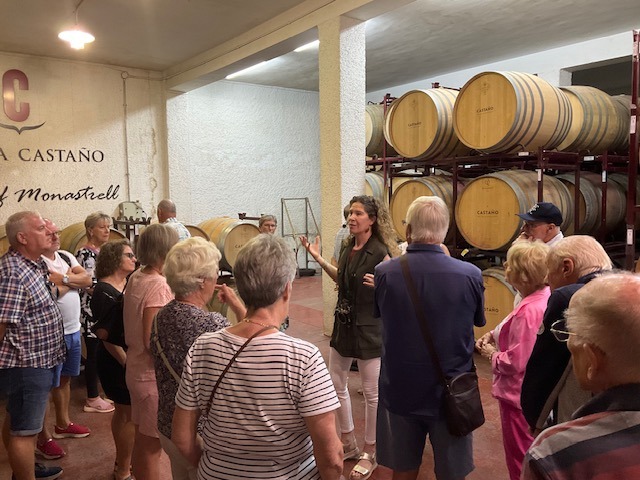
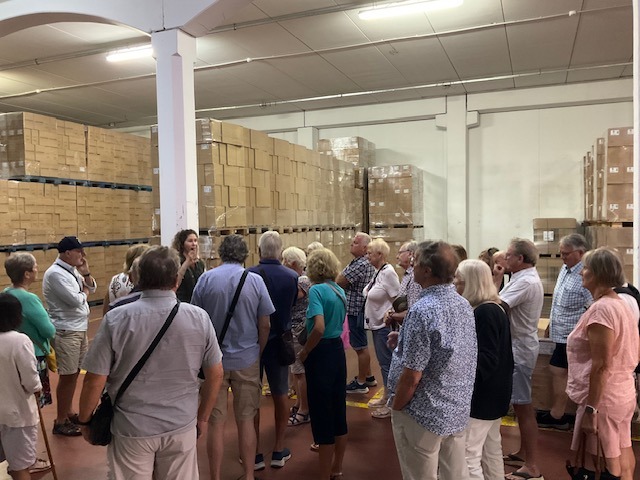
We were met by our guide Raquel, whom many of us had met before from her visits to present Castaño wines to the group in Moraira. She had prepared a very interesting day for us; starting with a tour of the winery following the wine making process from grape harvesting to the boxes of wine ready for shipping. Next was a tasting of 3 wines followed by lunch in the bodega’s restaurant with 4 more wines to sample.
Raquel said that the climate at Yecla was ideal for growing the hardy monastrell grape, from which 70% of the Castaño wines are produced – summer temperatures reach 40c with winter dipping to -7c and there’s an average of 3,400 hours of sunshine per year. (Not that day though, with several of us questioning the wisdom of being clad in short sleeves and shorts).
The bodega has 400 hectares of vines in the immediate area and 600 hectares further afield and the winery produces 4 million litres of wine per year. That’s 2.5 million bottles and lots of larger containers. 90% of production is exported to over 30 countries.
After harvesting in Autumn, the white and rosé wines go though a single fermentation process which is completed by December, and the reds go through a double fermentation, usually complete by the end of January. This is mainly done in huge steel tanks which have a total capacity of 200,000 litres.
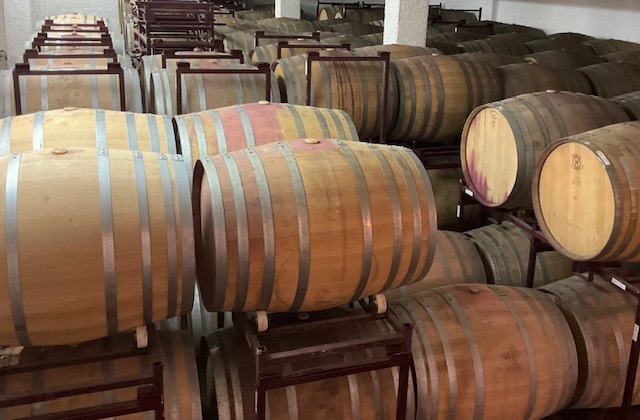
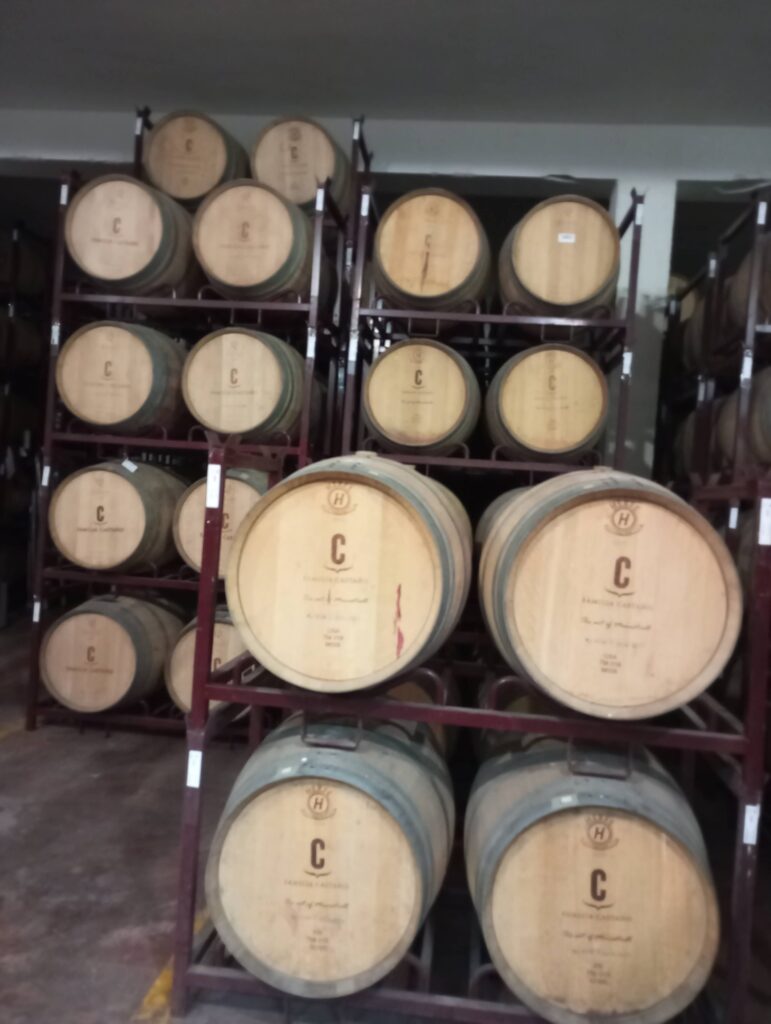
After fermentation the reds are aged in American or French oak barrels; only some of the white or rosé wines spend time in the barrels. At Castaño the winemakers check the wine in each barrel every 3 months and they decide when to take them from the barrels prior to bottling. As the American and French oak barrels affect the wine differently, sometimes the wine will be aged in both American and French barrels.
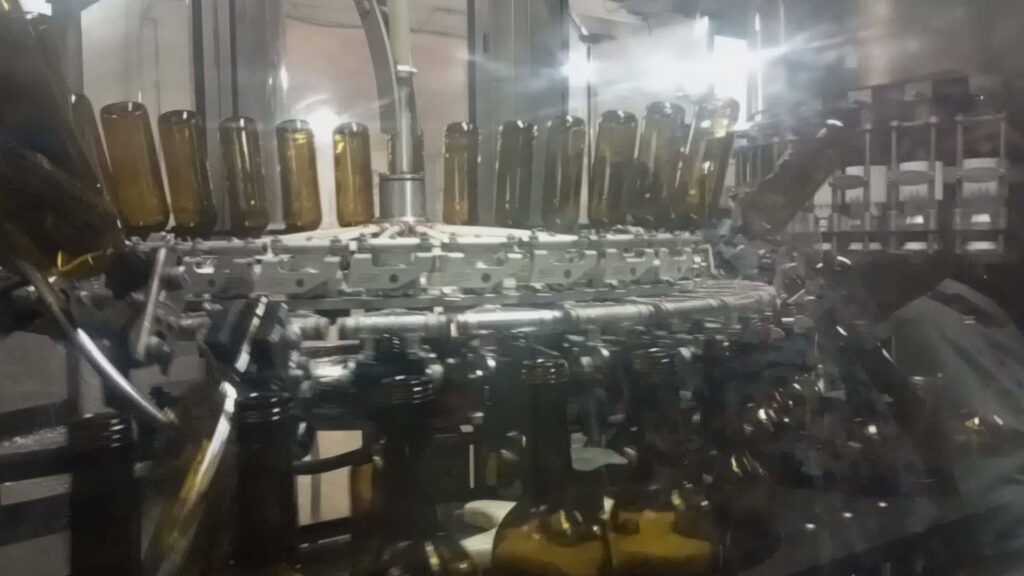
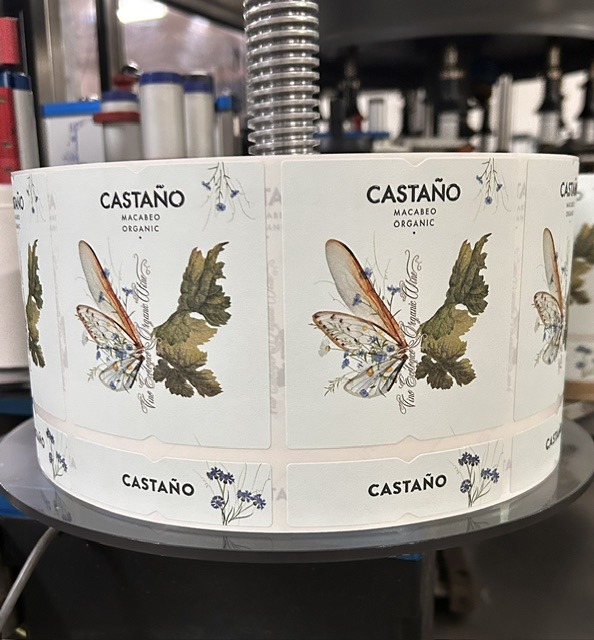
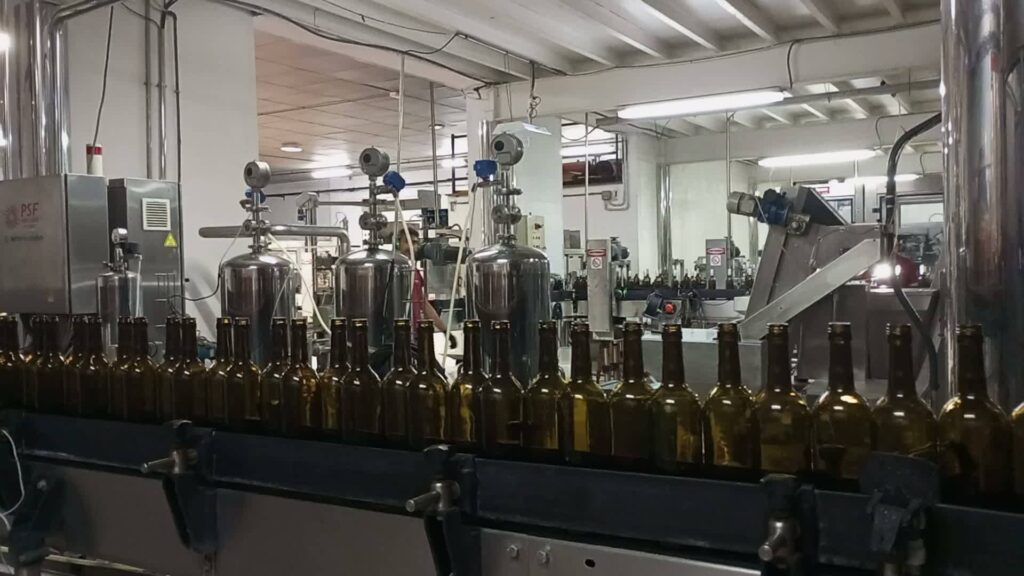
In June, the production has reached the bottling and packaging stage and many of the group had not seen this before. The wine being bottled was a vegan white wine and was sealed with a screw cap. Castaño puts screw caps on their white and rosé wines unless the country to where the wine is destined erroneously thinks that wines with a screw cap are inferior to wines with a cork. And what makes a wine vegan? The Monastrell grapes are grown organically, so the wines can be called organic. The wines need to be clarified using proteins, and a common protein used is derived from egg white, which isn’t vegan. The proteins used to clarify the vegan wines are derived from peas, which is vegan.
Our wine tasting was done in the oldest part of the winery. It was a room with several concrete fermentation tanks making up the walls and a further concrete tank below our feet. The concrete tanks are still in use. We tasted 3 wines, not surprisingly one of each colour. The white was a vegan wine made from the Macabeo grape. Very pale, dry and no oak. The rosé was Monastrell and semi sweet – too sweet for some, but perhaps best drunk on its own on a sunny afternoon.
Someone noticed that the handle to the access hatch to one of the concrete tanks was completely covered by cling film. Why? Raquel explained that the wine in the tank was Kosher and destined for a Jewish community. Which means that human hands cannot touch any part of the grapes or equipment that is used at any stage of the wine making process. Hence the cling film on the handle. She told us that a Rabbi would come and inspect every stage of the process to make sure.
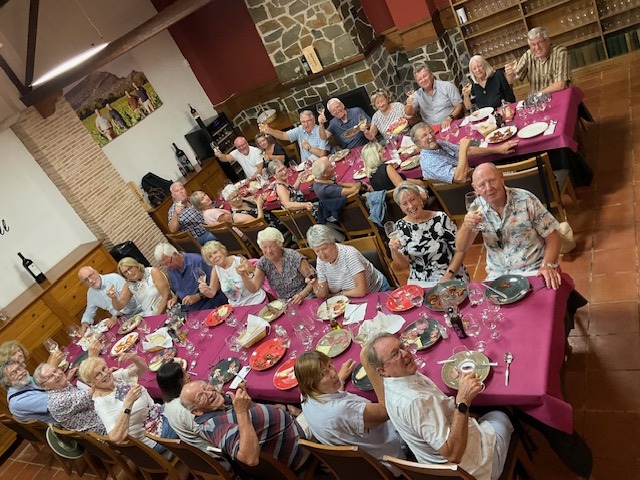
Then to lunch. Plates of cheeses and hams were followed by a lovely fresh Valencian salad (perhaps called a Murcian salad in Yecla), with a main course of a delicious chicken paella. The meal was accompanied by 4 wines. The white was a blend of 80% Macabeo and 20% Chardonnay and the rosé was a lot drier than the tasting wine. These were then followed by a red Monastrell and a sweet Monastrell dessert wine.
What does every visit to any commercial venture end with? The shop of course, which judging by the number of cases bought, indicated a very successful day out.
It was a quiet bus ride back to Moraira – only punctuated by the occasional snore.
Raquel was an excellent guide and host, but most of all, special thanks go to our group leaders Pat and Brian Clarke for organising another very successful trip.
Our thanks go to John Snell for writing the above article, to Dina Jones for being the official photographer of the day, to the very knowledgeable Raquel Ortuño for giving us such an informative and enjoyable tour and to Vicente our bus driver.