What a glorious day for adventure! We set off bright and early from Moraira at 8:30 a.m., the air buzzing with chatter and excitement. Our driver, Chimio, greeted us with a warm smile and proved to be both friendly and skillful — a reassuring start to the day.
As we rolled into Gandia, we learned that the historic city centre is entirely pedestrianised, so our bus dropped us off at the station. From there, we enjoyed a pleasant walk through the bustling streets to our destinations: the magnificent Ducal Palace and the Church de la Seu or Collegiate.
To keep things running smoothly, Paul cleverly divided us into two groups — the “P Group” for Palace and the “C Group” for Collegiate (led by Carole — me!). Naturally, this caused plenty of laughter and friendly teasing as we sorted ourselves out. Once tickets were in hand, we split off to explore our respective wonders.
At 11:15, the groups reunited briefly for a well-deserved coffee break while a religious service took place in the Collegiate Church. It was a lovely moment to relax, soak in the sunshine, and compare notes before swapping venues at 12:15.
The Collegiate Church of Santa María
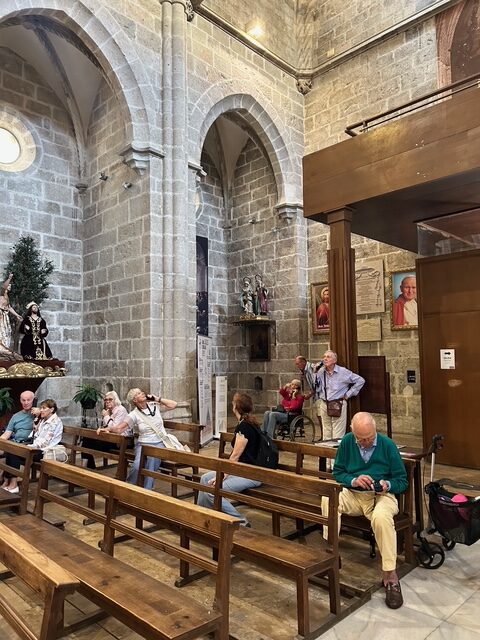
The Collegiate Church of Santa María is a true Gothic gem rising from the heart of Gandia. Construction began in the 14th century and wasn’t completed until two hundred years later — patience clearly pays off! Thanks to Pope Alexander VI, the church was elevated to the rank of Collegiate, and in 1931 it was declared a National Historic Monument. Our audio guides were a treat — with beautifully narrated, first-person stories that whisked us straight back to medieval times. The church’s single central nave is lined with side chapels, once filled with ornate altarpieces, paintings, and sculptures tragically lost during the Spanish Civil War.Still, its architectural majesty remains. The Puerta Sur (South Door), Puerta de Santa María, and Puerta de los Apóstoles — one of the first works by Damián Forment, a forerunner of the Spanish Renaissance — are exquisite examples of craftsmanship and history combined.Afterward, we had some free time to wander. The weather couldn’t have been better — blue skies, warm sunshine, and the lively hum of Gandia’s city centre, with its charming mix of shops, bars, and cafés. Everyone agreed: Gandia was a delightful surprise!
The Ducal Palace of Gandia
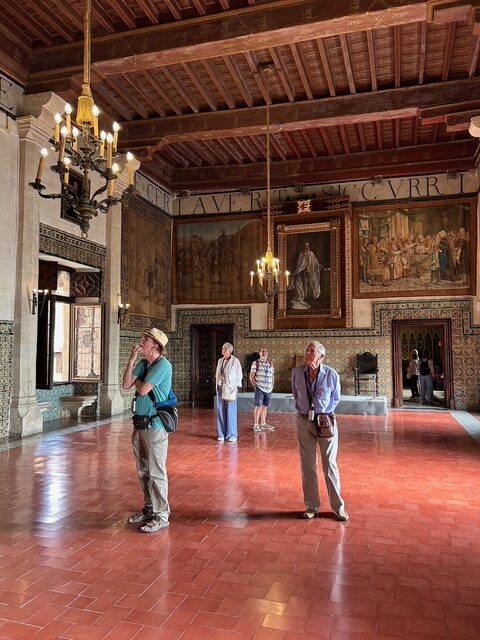
When it was our turn to visit the Ducal Palace, we were in for a real treat. This astonishingly beautiful building was once the residence of the Royal Dukes of Gandía — and later, from 1485, the powerful Borgia family. It’s even the birthplace of Saint Francis Borja.The palace’s origins stretch back to the 15th century, built in Valencian Gothic style and later restored by the Jesuits, who turned it into a sanctuary. It stands proudly against the ancient city walls, its two gates — one Gothic and one Renaissance — opening into a world of splendor.
Inside, the magic truly unfolds. From the magnificent Golden Gallery with its ornate Baroque flair to the grand Crown Hall, every room is a masterpiece. The hand-painted ceramic tiles from Manises shimmer in shades of blue, white, and gold — a feast for the eyes and a testament to Valencian artistry.Originally designed as a fortified Gothic castle, the Ducal Palace was transformed over the centuries into a luxurious residence. The grand staircase leads to halls that seem to whisper the secrets of the Borgias — one of Europe’s most fascinating families.
The Legacy of the Borgias
The House of Borgia (or Borja in Valencian) rose from nearby Xàtiva to become one of the most powerful and controversial families of the Renaissance. Producing two popes — Callixtus III and Alexander VI — they were both revered and reviled. Rumors of scandal, intrigue, and even poison swirl around their legacy, yet they were also great patrons of art and architecture, leaving behind cultural treasures that still awe us today.Whatever one believes about their legendary misdeeds, one thing is certain: the Ducal Palace of Gandia stands as a monument to their influence, ambition, and taste for grandeur.
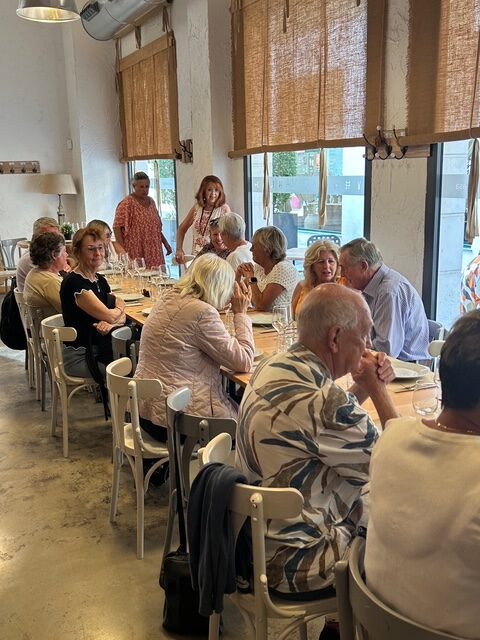
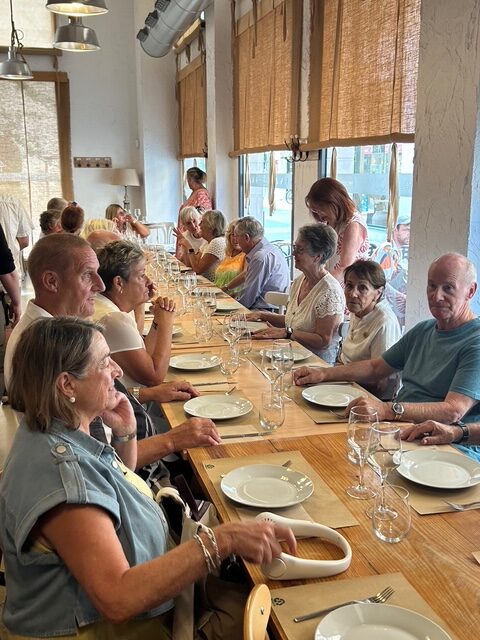
After our Historical Tours we were ready for our lunch in a local restaurant where we had local delicacies and lots of wine.
A truly lovely day out.
As the day drew to a close and we made our way back to the bus, everyone agreed it had been a day to remember — a perfect blend of history, beauty, and good company. Gandia, with its golden past and vibrant present, truly captured our hearts.